
Trio Catering Case Study:
Nine Services, One Shape
Nine catering service lines built to one page shape, and a site we later repaired for free after it went unmaintained.
Visit Website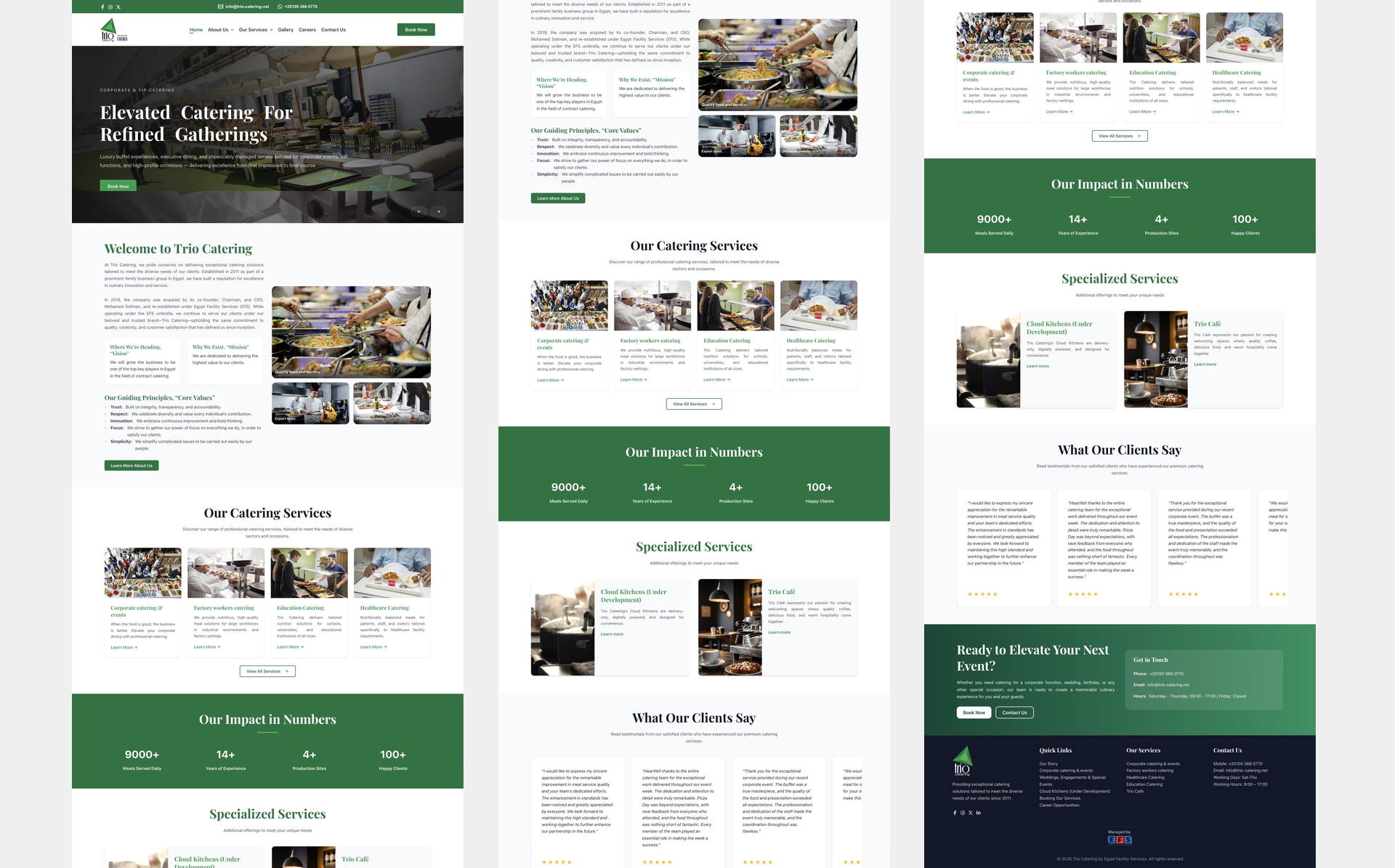
The numbers speak for themselves
Lead Generation
PageSpeed Score
Organic Traffic
Avg. Load Time
Visual Showcase
Crafted with precision, down to the pixel
Overview
How we transformed this business

The Problem
Trio sells to procurement managers at companies, hospitals, schools and factories. The sites they would be compared against introduced their own companies at length and answered a buyer’s questions badly, and Trio had nine separate service lines that all had to be comparable.

Our Approach
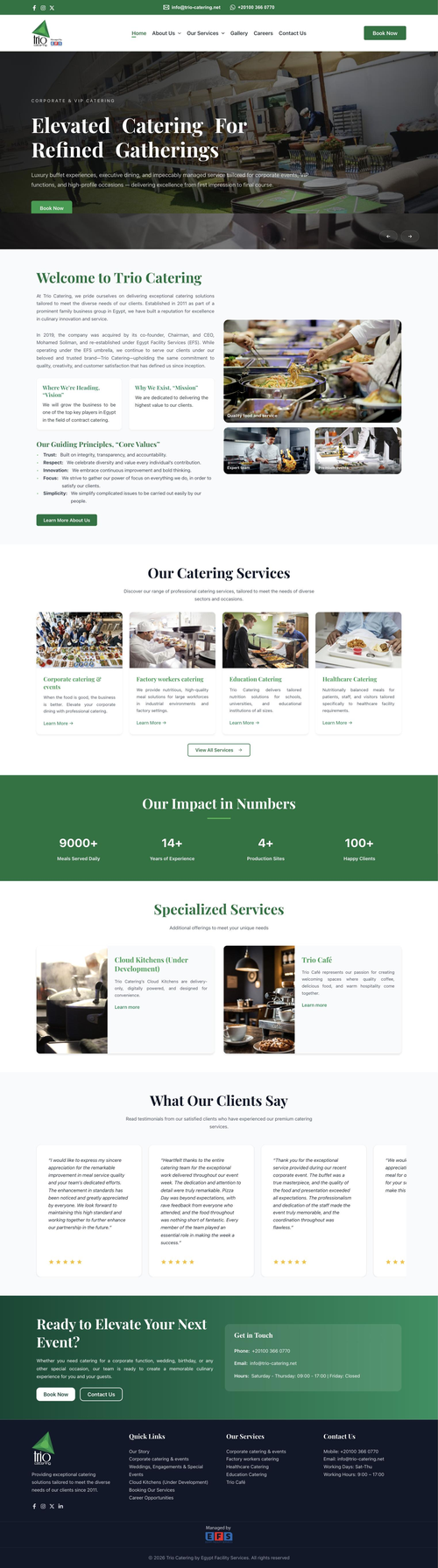
We listened before proposing, presented options rather than one design, and let management choose before the quotation. Then we settled the structure: one service page shape, repeated nine times, so every service answers the same questions in the same order.

The Outcome
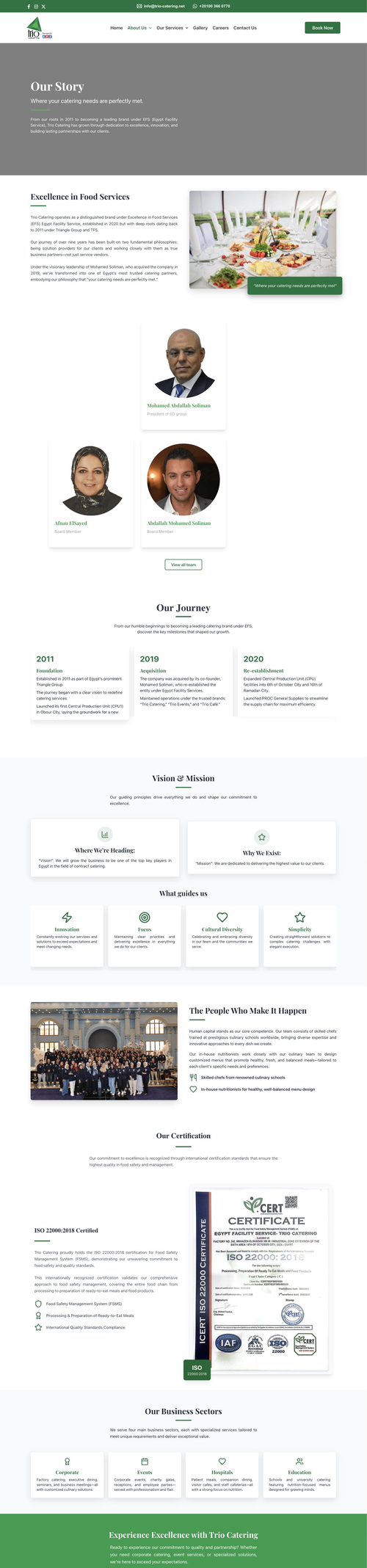
Nine service pages in three families, a company story carrying the ISO 22000:2018 certificate, a gallery of forty photographs, and three forms doing three different jobs. When the site later broke through lack of maintenance we repaired it at no charge and added protections against a repeat.
Project Story
From vision to launch — every step, intentional
- Management described what they wanted before we described what we sell
- What came out of it was a set of constraints rather than a brief
- Which sectors they serve, who signs the contract, and what that person needs to see first
- We presented options instead of one recommendation dressed up as the only answer
- Management chose the direction that fitted them
- The quotation came after the choice, and design work started only after they approved it
- They introduced their own companies at length
- They left the buyer's questions scattered or missing
- That decided the structure: nine service pages built to one shape
- Management reviewed the design and returned a list of amendments
- We implemented them and presented the result again
- Development began against a design nobody was still arguing about
- Built as specified, delivered, and given the free support period we include
- Months later it broke through lack of maintenance
- We restored it for free and added protections so the same neglect would not repeat
What We Built
Performance & Delivery

Nine Services, Grouped in Three Families
Corporate work, the Trio food carts, and the café run inside a client's premises. The menu groups them so a factory buyer never has to read about coffee. Three of the nine carry the client's own “Under Development” label, and it stays visible on the site rather than being hidden.

One Service Page, Repeated Nine Times
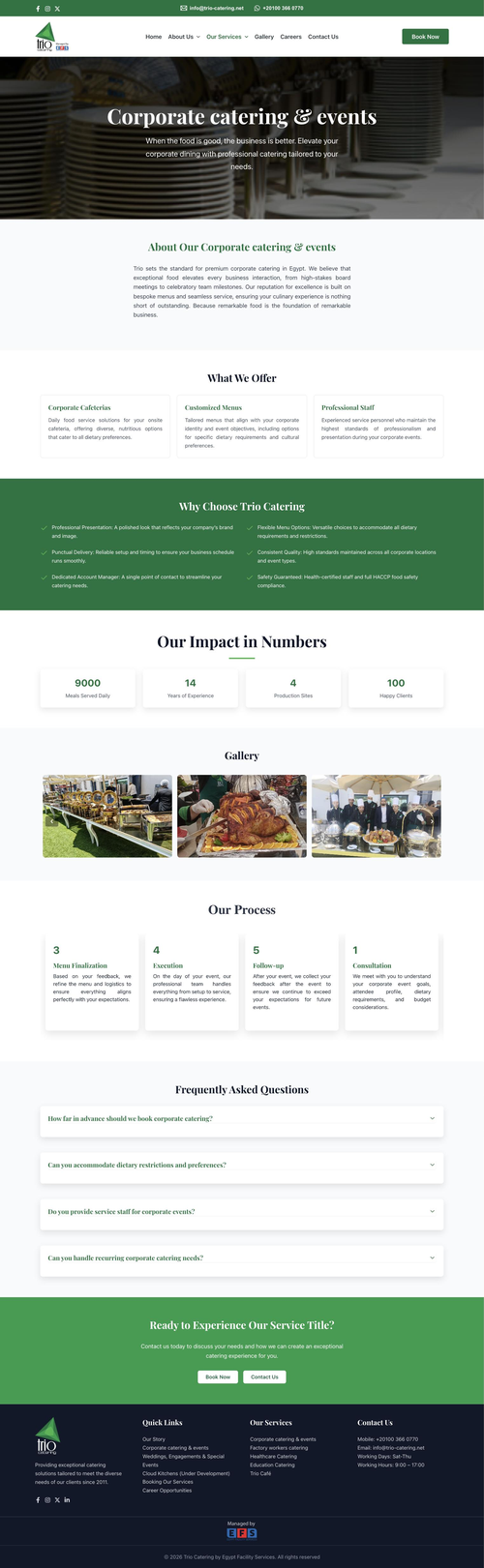
Each service page runs the same sequence: what the service is, what it includes, why Trio, the numbers, a gallery, the process, and the questions buyers ask. Somebody comparing two of Trio's services is comparing like with like.

The Process, Named Step by Step
Every service publishes its own steps rather than a generic diagram. Corporate catering runs Consultation, Custom Proposal, Menu Finalization, Execution, Follow-up. Trio Café runs a different five. The buyer reads the actual sequence.

The Company Story, With the Certificate on It
Our Story carries the timeline in five stages, the vision and mission, the values, the leadership, the four business sectors, and the ISO 22000:2018 certificate as an image anyone can read. Food safety is the first thing a hospital or a school asks about, so it sits on the page rather than in a promise.

Three Forms Doing Three Different Jobs
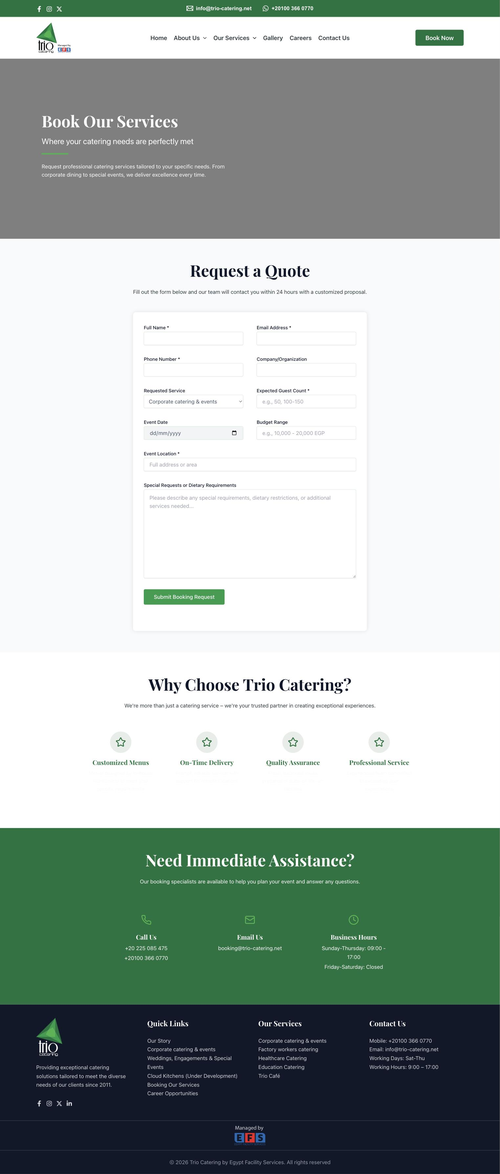
Booking asks for event type, guest count, date and budget range. Careers takes the position applied for, years of experience, a cover letter and a CV upload. Contact stays short. One generic form would have collected none of that.

Contact Routes That Skip the Form
WhatsApp, phone and email sit in the header of every page, with the working days and hours beside them. Somebody who wants to call at ten on a Tuesday can see that a person will answer.
Behind the Results
Why this project succeeded

They Came With a Request, Not a Brief
The first meeting did the work a brief would have.
“We want a website” is where most projects start. An hour of listening turned it into something buildable: the sectors they serve, the person who signs the contract, and the questions that person arrives with. Everything after that was decided against those answers rather than against taste.

The Choice Was Theirs Before the Price Was
Options first, quotation second.
We presented several directions rather than defending one, and management chose before the quotation was written. A client who picked the direction reviews it as an owner. That is why the review round produced a list of amendments and not a request to start again.

The Design Was Signed Off Before the Code
The build was construction, not negotiation.
Amendments were implemented and the design was shown again until it was approved outright. Development then ran against something settled. Projects that skip this step pay for it later, when a change of mind arrives as a rebuild instead of a revision.

We Repaired It Free, Then Made It Harder to Break
Restoring it was the easy half.
The site failed because it had gone unmaintained, and we fixed it at no charge. The part that mattered more came after: additions that reduce what an un-updated site can break. Without them we would have been repairing the same failure again on the same terms.
Sound Familiar?
What This Means For You
- Struggling with low traffic and zero visibility?
- Poor conversion rates despite good products?
- Slow, outdated website hurting your credibility?
- Competitors outranking you on every search?
Let's achieve similar results for your business.
Ready to Build a Website That Actually Makes You Money?
We build high-performance websites engineered for growth, revenue, and measurable business results.