

Masar Law Case Study:
The Second Time, They Saw It First
A Riyadh law firm arrived with a website they had already paid for and did not want to keep. The rebuild started by listening to why.
Visit Website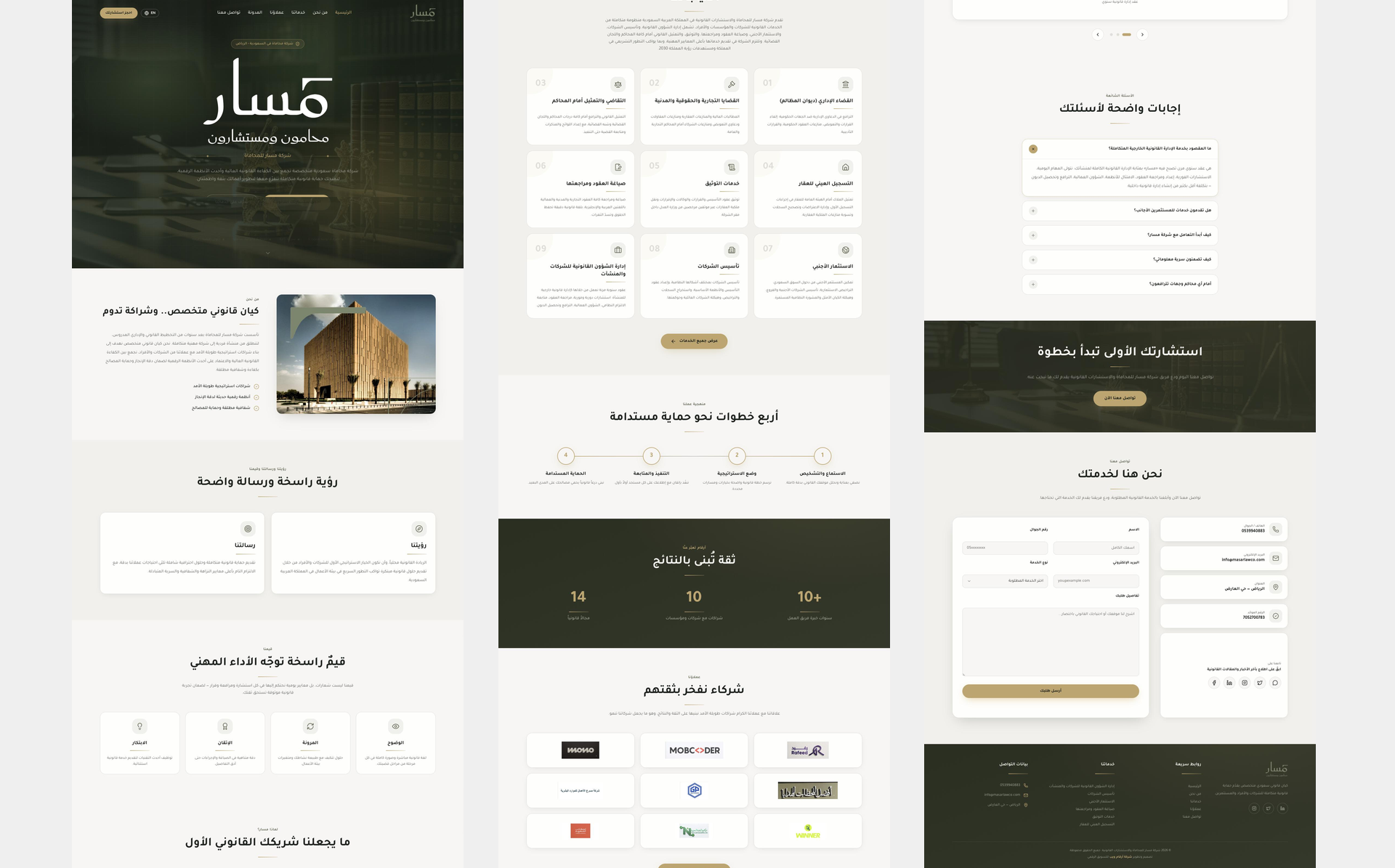
Visual Showcase
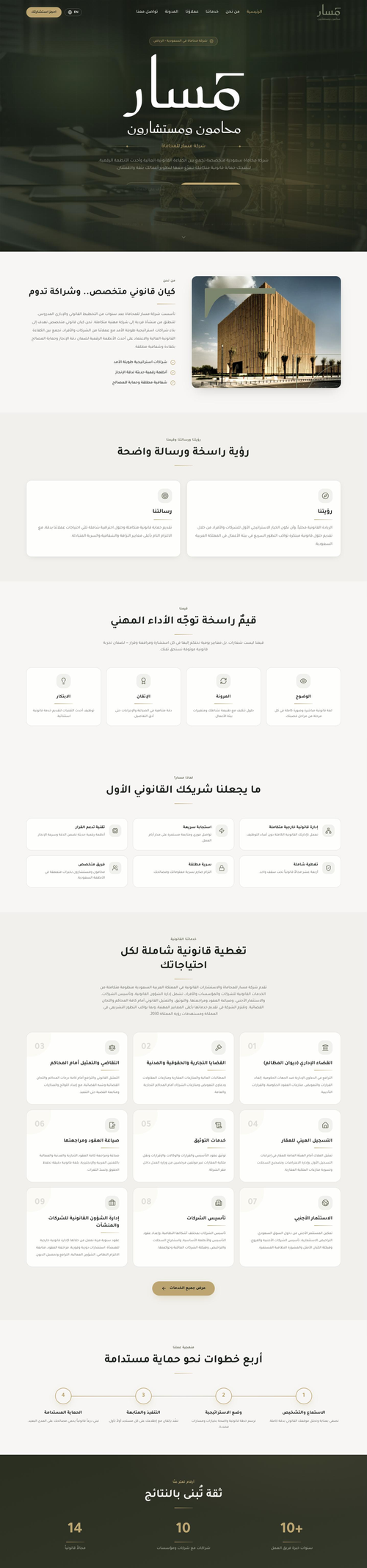
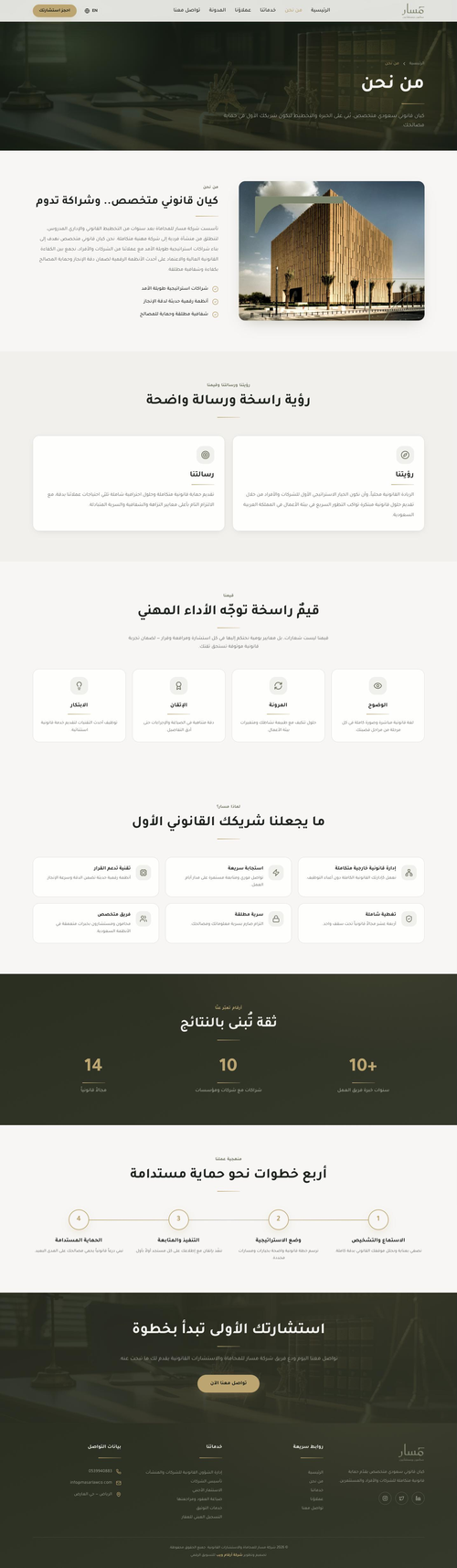
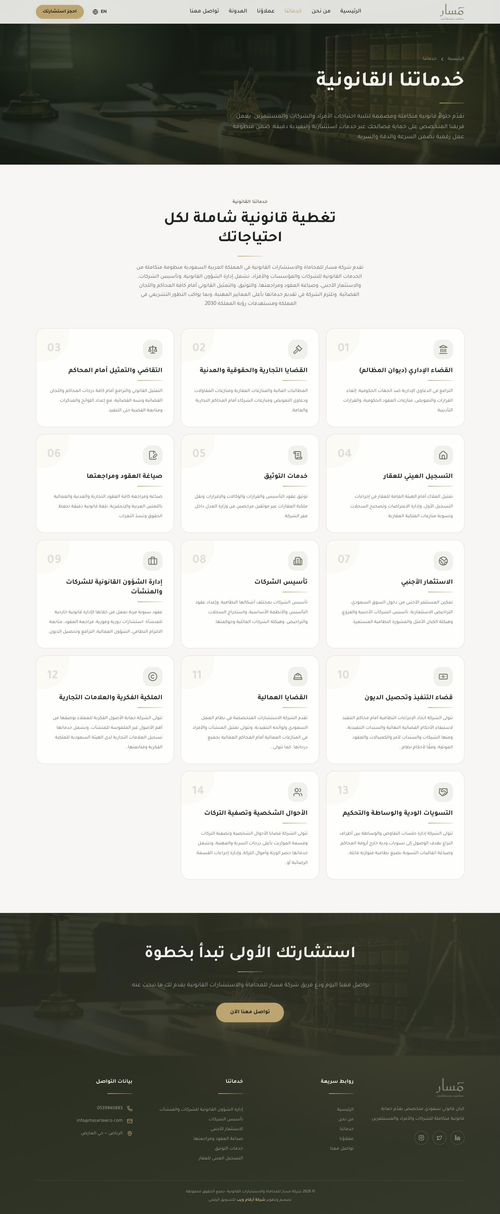
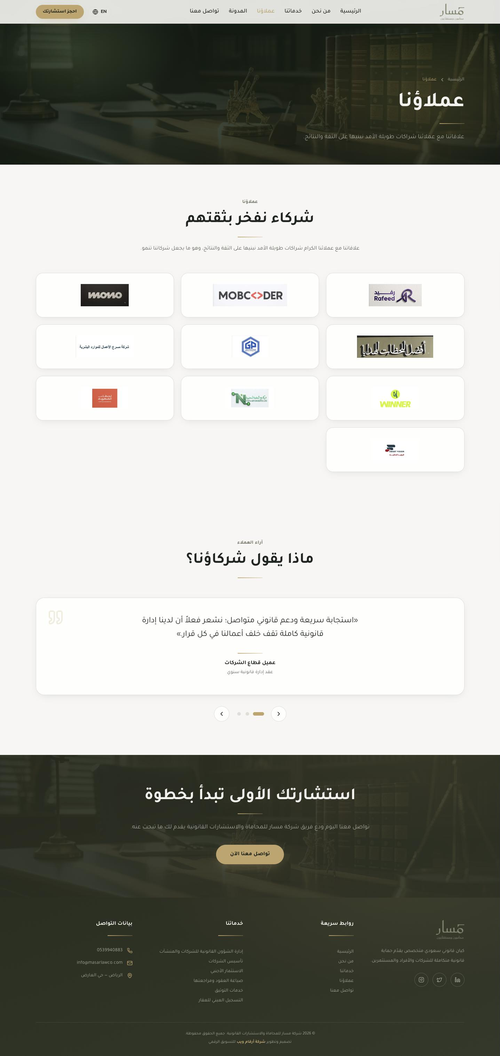
Crafted with precision, down to the pixel
Overview
How we transformed this business

The Problem
A site already built and already rejected. The firm had paid for a website they would not use, and had no appetite for a second disappointment.

Our Approach
Nothing asked on trust. We sent our previous work for them to review on their own time, then designed the interface and put it in front of them before a line of the site was built.

The Outcome
A bilingual site covering fourteen practice areas, with consultation booking, a blog and a client section, delivered against the requests recorded at the start. The firm asked to keep working with us.
Project Story
From vision to launch — every step, intentional
- Took the referral and arranged a first meeting with the firm’s management
- Went through the existing site with them and recorded, item by item, what they wanted changed
- Separated what was a design problem from what was a structure problem
- Left with a written record of their requests rather than an assumption of what they meant
- Presented a selection of previous work during the meeting
- Sent the full selection at their request so they could review it on their own time
- Left the decision with them rather than pressing for it in the meeting
- They came back the following day and accepted the proposal
- Reviewed the requests from the first meeting against what the firm actually does
- Mapped the fourteen practice areas and how a visitor would find the right one
- Planned the site in Arabic as the primary language with English alongside
- Set out the pages: home, about, services, clients, blog and contact
- Designed the interface and presented it to the firm for review
- They asked for additions and changes
- Implemented every one of them and presented the revised design
- Development began only once the design was settled
- Built the approved design as a bilingual site
- Added consultation booking with the visitor selecting the service it concerns
- Set up the blog, the client section and the contact routes including WhatsApp
- Delivered the site, and the firm asked to keep working with us and offered to refer us on
What We Built
Performance & Delivery

Fourteen Practice Areas
Each area of the firm’s work has its own page, from administrative litigation before the Board of Grievances to enforcement and debt collection, so a visitor lands on the one that matches their problem.

Consultation Booking
A visitor books a consultation and selects the service it concerns, so the firm knows what the enquiry is about before answering it.

Arabic and English
The site runs in Arabic as the primary language with a full English version, which matters for a firm whose work includes foreign investors entering the Saudi market.

The Firm’s Method, Written Out
A four-step section on how the firm works with a client, from the first diagnosis to the long-term arrangement, so a prospect knows what happens after they call.

Clients and Blog
A client section and a blog, both editable from the dashboard, so the firm can keep adding to the site without coming back to us.

Direct Contact Routes
Phone, email and WhatsApp reachable from every page, because a legal problem is rarely something the visitor wants to leave until tomorrow.
Behind the Results
Why this project succeeded
Starting From What Went Wrong
The brief already existed. It was sitting in a site they did not want.
A firm coming to a second agency has already told the first one what they wanted. Rather than starting a fresh discovery, we went through the site they had and asked what was wrong with each part of it. That conversation produced a sharper specification than a blank-page brief would have, because every request was attached to something they could point at.

Deciding Without Us in the Room
We sent the portfolio and stopped talking.
In the meeting we showed part of our previous work. They asked us to send it so they could go through it themselves. We sent it and left the decision with them. They accepted the following day. A client who has already paid once for something they could not use is not helped by pressure. They are helped by evidence and the time to look at it.

The Design Came Before the Code
They saw the interface, asked for changes, and got them before development started.
We designed the interface and put it in front of the firm before writing the site. They asked for additions and edits, and we implemented them. Only then did development begin. It is the cheapest point at which to change your mind, and for a client on their second attempt it is also the point at which the work stops being a promise.

The Relationship After Delivery
The handover was not the end of the arrangement.
The site was delivered against the requests recorded at the start. The firm asked to continue working with us and offered to refer us to others. That pattern, the client coming back and sending people, is the one we watch most closely, because it is the only measure of the work a client controls entirely.
Sound Familiar?
What This Means For You
- Struggling with low traffic and zero visibility?
- Poor conversion rates despite good products?
- Slow, outdated website hurting your credibility?
- Competitors outranking you on every search?
Let's achieve similar results for your business.
Ready to Build a Website That Actually Makes You Money?
We build high-performance websites engineered for growth, revenue, and measurable business results.
Related projects.
Kidana Travel Website
Custom Laravel Travel Platform with Online Booking
Kidana Travel Social Media
Social Media Marketing for Hajj and Umrah
Boya Store Website
WooCommerce Store for a Multi-Brand Paint Retailer